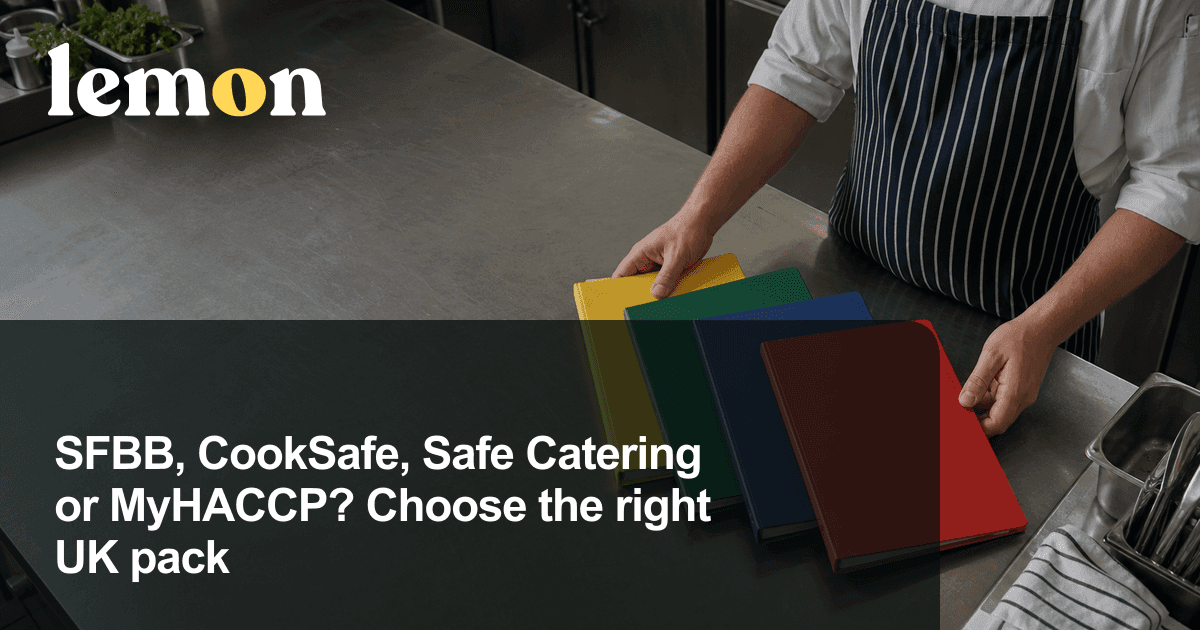
A small restaurant, cafe, takeaway or sandwich bar usually starts with the official food safety pack for its nation: SFBB in England and Wales, CookSafe in Scotland, or Safe Catering in Northern Ireland. MyHACCP is the FSA tool aimed at small UK food manufacturers, especially where processes are more complex than everyday catering.
The name on the cover is only the starting point. The pack or plan must be completed for your business, put into practice, kept current and adapted when your menu, process, equipment or premises change.
The short answer
- England or Wales, simple catering or retail: start with SFBB.
- Scotland, catering: start with CookSafe.
- Northern Ireland, catering or retail with catering: start with Safe Catering.
- Small UK food manufacturing: consider MyHACCP.
Those are official guidance choices, not certificates or automatic approval. The legal duty is to operate food safety management procedures based on HACCP principles. The right framework helps you build those procedures in a proportionate way.
A static four-question chooser
Follow the first answer that fits. If your operation sits between two routes, or has higher-risk processes, ask your local authority environmental health team before treating a pack as complete.
- Is the main business food manufacturing, or catering and retail?
- Food manufacturing: continue to question 2.
- Catering or retail: continue to question 3.
- Is it a small UK manufacturer, likely with 50 or fewer employees, or does it need a detailed documented HACCP study?
- Yes: consider MyHACCP.
- No or unsure: get tailored advice before choosing a framework.
- For catering or retail, where does the business operate?
- England or Wales: start with SFBB.
- Scotland: start with CookSafe.
- Northern Ireland: start with Safe Catering.
- Does the catering or retail operation have products or processes the starter pack does not cover well?
- Yes: get advice on adapting the pack and whether a more detailed HACCP study is needed.
- No: complete and implement the pack for your nation.
How the four systems compare
SFBB for England and Wales
The FSA's Safer food, better business guidance is for small businesses in England and Wales. It has packs for caterers and retailers, with safe methods on cross-contamination, cleaning, chilling, cooking and management, plus a daily diary. The FSA tells businesses to work through the pack, complete the safe methods that apply, follow them and fill in the diary every day.
Choose SFBB when the work is straightforward catering or retail and an official, practical framework is a good fit. It still needs your menu, equipment and actual working practices added to it.
CookSafe for catering businesses in Scotland
Food Standards Scotland's CookSafe guide helps Scottish catering businesses understand and implement HACCP-based systems. It includes a flow-diagram section, HACCP charts, house rules and records. The records section includes templates for deliveries, cold food, hot temperatures, hot holding and review.
Choose CookSafe for a Scottish catering business. Use its templates as a way to build procedures that fit the business, not as evidence that the work is being done without completing them.
Safe Catering for Northern Ireland
The FSA's Safe Catering guidance is its food safety management guide for Northern Ireland. It helps catering businesses and retailers with a catering function use a HACCP-based food safety plan and keep appropriate records. The official page provides the full guide as well as separate recording forms for deliveries, cold storage, cooking, cooling, reheating, hot holding, hygiene checks and training.
Choose Safe Catering for Northern Ireland rather than assuming an England and Wales pack applies unchanged.
MyHACCP for small UK food manufacturers
MyHACCP is a free web tool that guides a business through developing a HACCP-based food safety management system. The FSA says it is aimed at small UK food manufacturing businesses, likely with 50 or fewer employees, though other sectors may find it useful. It says most simple retail outlets, restaurants, cafes and sandwich bars are likely to find SFBB or Safe Catering a simpler approach.
MyHACCP is a better starting point when the business manufactures food and needs a more detailed documented study of its hazards and controls. It does not replace the prerequisite hygiene controls or the work of making the final plan match what happens on site.
What to do after choosing a pack or tool
- Read the whole framework and identify the sections that apply to your operation.
- Complete it using your actual menu, processes, premises, suppliers and equipment.
- Train the team on the safe methods and make the instructions available in the kitchen.
- Run the checks and record results, problems and corrective actions as work happens.
- Review the system on a schedule and when something material changes.
That sequence reflects the legal requirement to put in place, implement and maintain HACCP-based procedures. It is also why a completed pack should remain a living working document rather than an inspection-day folder.
Turn the pack into records your team can use
Your pack or plan describes the controls. The daily records show those controls happened. The FSA's MyHACCP Principle 7 guidance says documentation and record keeping should suit the nature and size of the operation and be enough to help verify that controls are in place and maintained. Its examples include the HACCP plan, monitoring activities, deviations and corrective actions, verification, modifications and training.
Read our food safety records checklist for a restaurant-focused version of that map. For more official tools, see our list of free food safety resources for UK kitchens.
Where Lemon fits
Lemon does not write or choose your HACCP plan. Once you have completed the right framework, it can help with the daily record keeping: fridge and freezer temperatures, cook, cool, reheat and hot-hold food checks, deliveries, checklists, issues and PDF exports. It is not a continuous sensor system and it does not provide durable offline recording. You remain responsible for the pack, the controls and the decisions behind the records.