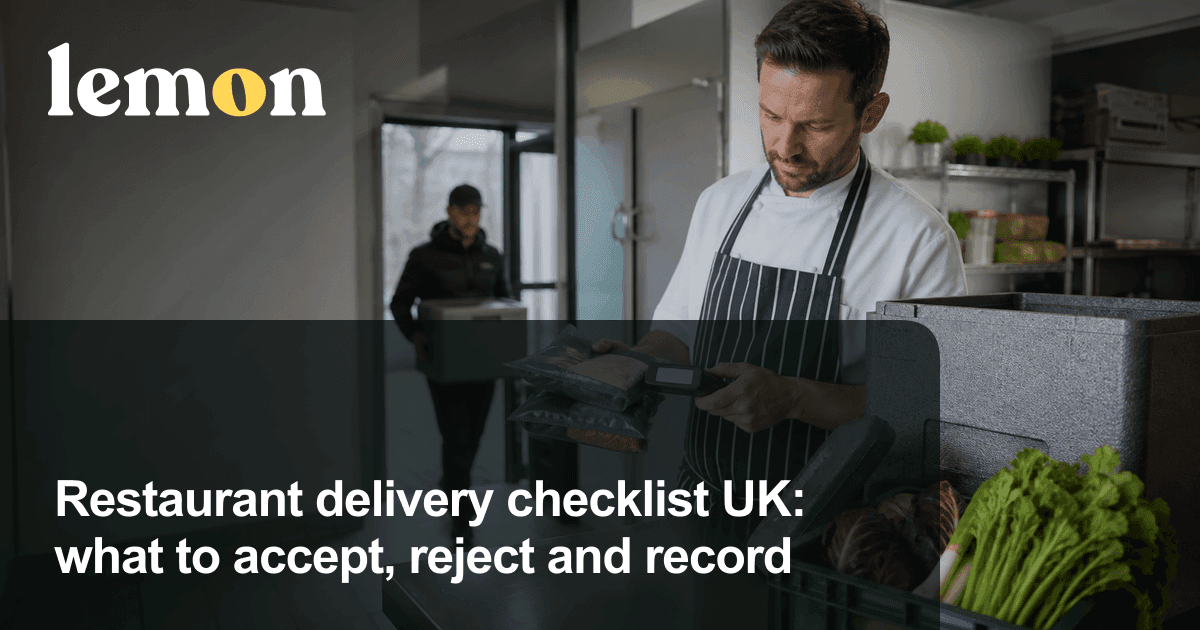
Check each food delivery while the driver is still there. Confirm the supplier and order, inspect dates, packaging, seals, cleanliness and raw-to-ready-to-eat separation, then spot-check temperatures against the limits in your own food safety system and the product's storage instructions. Accept or reject the goods and record any failure before putting food away.
There is no single receipt temperature that applies to every chilled or frozen product in every UK nation. Your goods-in rule should combine the law that applies where you operate, official national guidance, the manufacturer's label and your supplier specification.
The short answer
- Receive food in a clean area while the premises is open.
- Match the supplier, products and quantities to the order or delivery note.
- Check dates, packaging, seals, contamination risks and labelled storage conditions.
- Spot-check appropriate chilled, frozen or hot foods using the method in your plan.
- Accept or reject before the driver leaves, then record problems and supplier follow-up.
- Move accepted chilled and frozen food into storage without delay.
What to check when a restaurant delivery arrives
Supplier and order
- Is this an approved or otherwise reputable supplier under your purchasing procedure?
- Do the products and quantities match the order and delivery note?
- Can you identify the supplier, delivery date and products later if there is a recall?
GOV.UK's supplier and traceability guidance says businesses should use reputable suppliers and check that delivered food is cold enough where relevant, undamaged and what was ordered. It also says traceability records must identify suppliers, product types and quantities, and transaction and delivery dates.
Dates, packaging and food condition
- Check the use-by or best-before date and any batch or lot reference you need.
- Look for torn, wet or dirty packaging, broken seals, swollen packs, punctured vacuum packs or badly dented cans.
- Check for signs of spoilage, pests, thawing, leaks or contamination.
- Confirm raw food is separated from ready-to-eat food.
- Read any labelled storage temperature or other special storage condition.
Northern Ireland's Safe Catering guide tells businesses to make regular delivery time, temperature and quality spot checks. It specifically covers dates, raw and ready-to-eat separation, damaged packaging, seals and prompt chilled or frozen storage. These are useful checks elsewhere in the UK too, but each nation has its own food safety pack.
Temperature and storage condition
Choose a representative sample based on the size and risk of the delivery. Large deliveries may need more than one item checked. Use a cleaned and disinfected probe, an infrared check followed by a suitable confirmatory method, or another method written into your food safety system. Avoid puncturing sealed food unless your procedure and supplier agreement allow it.
Write down the product, the actual result and the limit it was checked against. "Cold" is not a temperature record. If a manufacturer states a lower storage temperature, follow that instruction.
What temperature should a food delivery be?
England, Wales and Northern Ireland: the FSA says cold food that requires temperature control must generally be kept at 8°C or below, and recommends setting fridges at 5°C or below. That chilled-storage requirement does not make 8°C a suitable universal acceptance target at the back door. Your delivery limit may need to be lower so food can be put safely into storage, and a label or supplier specification may require a lower temperature. See the official FSA chilling guidance.
Scotland: use Food Standards Scotland's CookSafe framework and your completed Temperature Control House Rules. CookSafe gives 5°C for chilled food and -18°C for frozen food as examples of limits a business might specify for purchase and delivery. They are examples to consider and document, not numbers to copy without checking the product and your operation.
For frozen food, check that it is still frozen, has no evidence of thawing and meets the labelled condition and your own specified limit. For hot deliveries, use the hot receipt or holding limit in your national pack and documented system. If a food has a special manufacturer instruction, that instruction takes priority over a generic checklist.
Our guide to UK fridge temperature law explains why the legal figure, official operating recommendation and a kitchen's own target are different things.
When to reject or hold a delivery
Reject food when it does not meet your documented receiving rules or you believe it has not been handled safely. Do not let a rejected item enter normal storage while a credit note is discussed. Keep it identified and separate, tell the supplier promptly and record the reason.
- The use-by date has passed.
- Packaging, vacuum packs or seals are damaged.
- Food is outside the relevant receiving limit or shows signs of thawing.
- Raw and ready-to-eat food were transported without adequate separation.
- There are signs of contamination, pests, leakage or spoilage.
- The product cannot be matched to the order or traceability information.
If the decision needs investigation, mark and hold the goods under your procedure until an authorised person decides what happens next. Record what evidence they used. Do not relabel or move questionable food into ordinary stock to deal with it later.
Food Standards Scotland's CookSafe HACCP chart for purchase and receipt tells businesses to decide whether food should be rejected or is safe to use, dispose of unsafe food and review the supplier or collection method. The outcome depends on the food and the business's written controls.
Print-ready restaurant delivery checklist
Open the print view for a clean A4 copy, or copy the fields into your own goods-in record. Add approved suppliers, product-specific limits and the manager escalation route before staff use it. Nothing entered on the checklist is saved or sent.
Food delivery record
Order, condition and traceability
- Approved or accepted supplier and delivery matches the order.
- Use-by and best-before dates are acceptable.
- Packaging is clean and intact, with seals unbroken.
- No signs of pests, leaks, spoilage, thawing or other contamination.
- Raw food and ready-to-eat food are adequately separated.
- Labelled storage conditions and allergen information are present where required.
Temperature spot-checks
What delivery records should a restaurant keep?
Keep the information needed for traceability and the evidence required by your food safety system. Invoices may already hold supplier, product, quantity and delivery details. The goods-in record adds the condition, sample temperature, acceptance or rejection and corrective action that an invoice cannot show.
- Supplier name and address, products and quantities, transaction and delivery dates.
- Delivery time and the person who completed the check.
- Products sampled, actual temperatures, methods and applicable limits.
- Packaging, date, separation or contamination failures.
- Accepted, held or rejected decision and quantity affected.
- Reason, supplier contact, credit or replacement and manager follow-up.
The legal traceability duty is broader than a temperature sheet. The official managing food safety guidance for England, Wales and Northern Ireland explains that records should remain current and available for inspection. Scotland's CookSafe includes a Delivery Record and permits equivalent paper or electronic forms. Our restaurant food safety records guide maps delivery evidence to the rest of your HACCP-based system.
Where Lemon fits
Lemon can record the supplier, products, an overall temperature, date checks, condition and notes alongside the rest of the kitchen's checks. Teams can review the delivery trail and export records as a PDF. See delivery records, temperature logs and reports. Lemon does not approve suppliers, set safe receiving limits, make the final food decision or replace the HACCP plan behind the check.